GHRP-2 Research Peptide (KP-102) – Hexapeptide for Controlled Signaling Studies
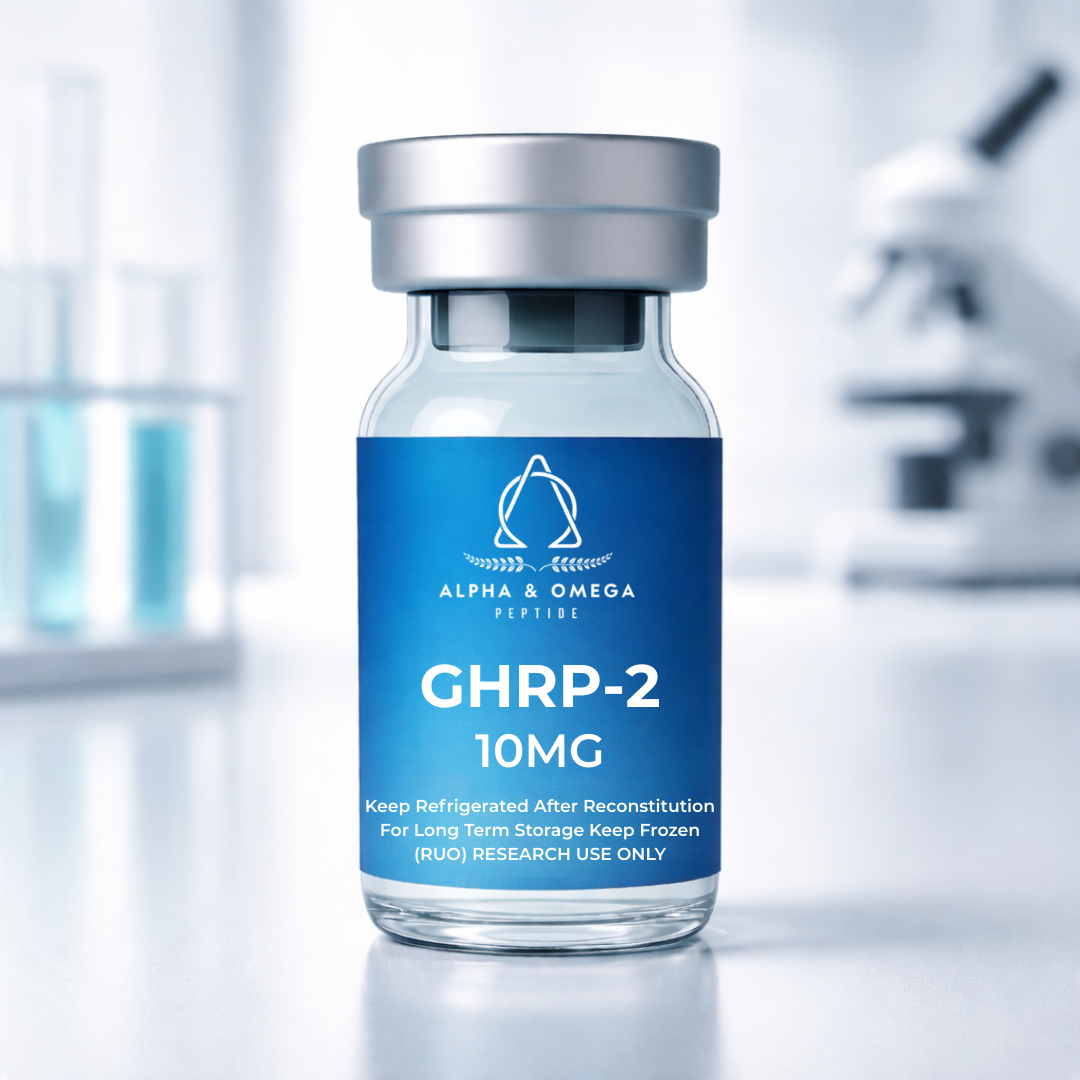
GHRP-2, also referenced as KP-102, is a synthetic hexapeptide supplied by Alpha Omega Peptide for controlled laboratory investigation. Researchers commonly include this compound in structured studies focused on peptide signaling behavior, receptor interaction models, and sequence-based analysis within defined experimental systems. Its clearly characterized hexapeptide structure supports repeatable handling and standardized testing conditions across organized research workflows.
Because GHRP-2 belongs to the Growth Hormone Releasing Peptide (GHRP) category, investigators frequently evaluate how this peptide sequence behaves within monitored research environments. This allows research teams to examine signaling patterns, interaction dynamics, and sequence-dependent response behavior while maintaining strict control over experimental variables. As a result, laboratories can compare observations across repeated trials with improved consistency and documentation alignment.
Supporting Structured Laboratory Investigation
Many laboratory teams incorporate GHRP-2 into research models where controlled peptide inputs are used to observe pathway behavior and receptor engagement under defined parameters. In vitro systems are commonly selected because they provide precise environmental oversight and support systematic measurement. Additionally, well-defined research materials help teams maintain consistency between runs and preserve clarity in experimental records.
In structured protocols, repeatability remains essential. Defined peptide compounds support organized workflows by reducing unnecessary variation during preparation and application. This enables researchers to focus on observation, documentation, and analysis while maintaining stable study conditions across phases of an investigational program.
Research Applications
GHRP-2 may be incorporated into a range of controlled research models, depending on study objectives and laboratory design. Typical applications include evaluation of peptide signaling behavior, receptor interaction analysis, and comparative studies involving related peptide analogs. By maintaining consistent parameters, teams can isolate defined variables and track measurable changes across multiple trials.
- Peptide signaling and sequence-dependent response studies
- Receptor interaction and pathway observation models
- Structure-based peptide analysis within controlled systems
- Comparative evaluation of related peptide analogs
- In vitro laboratory research requiring repeatable protocols
Quality & Batch-Level Consistency
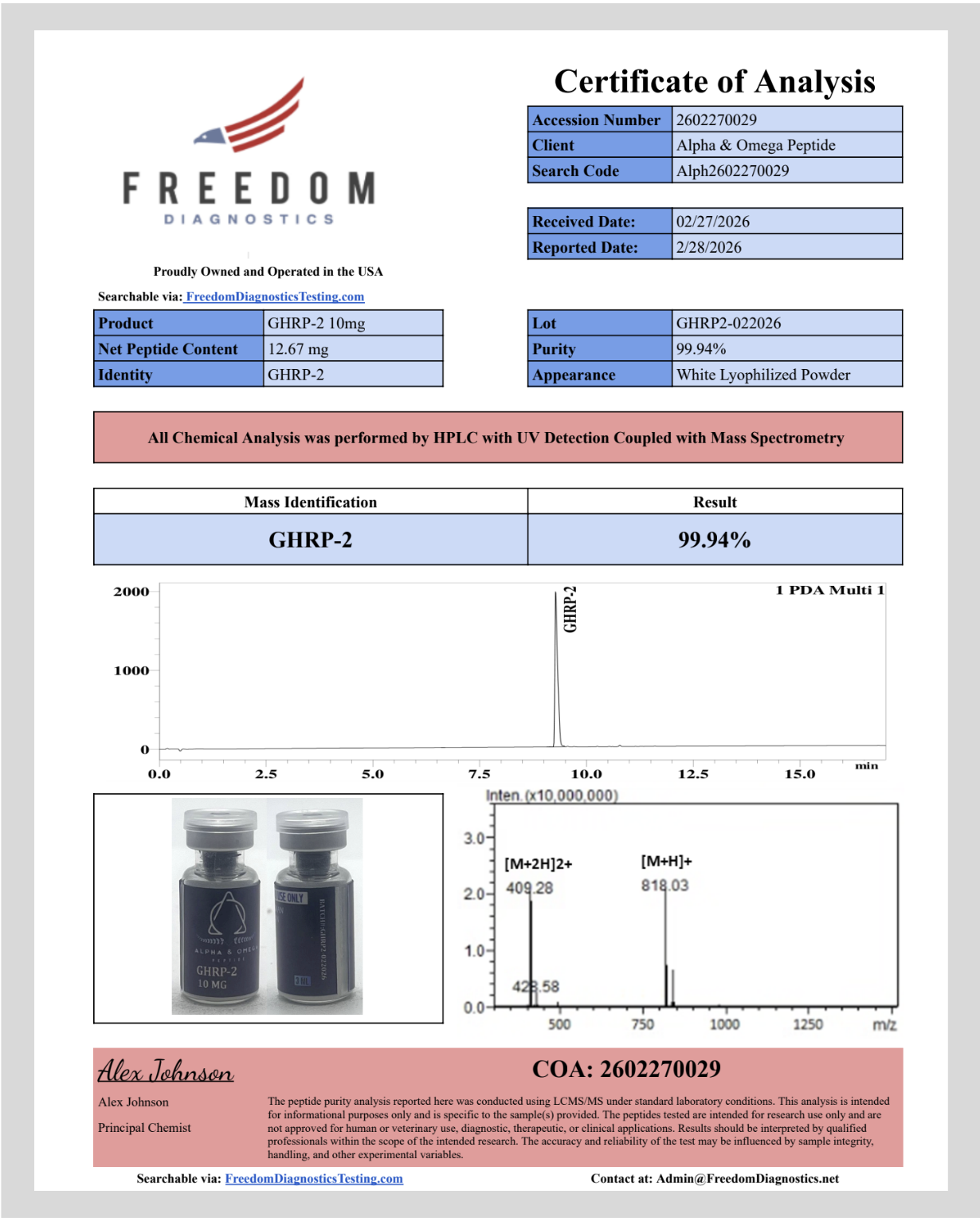
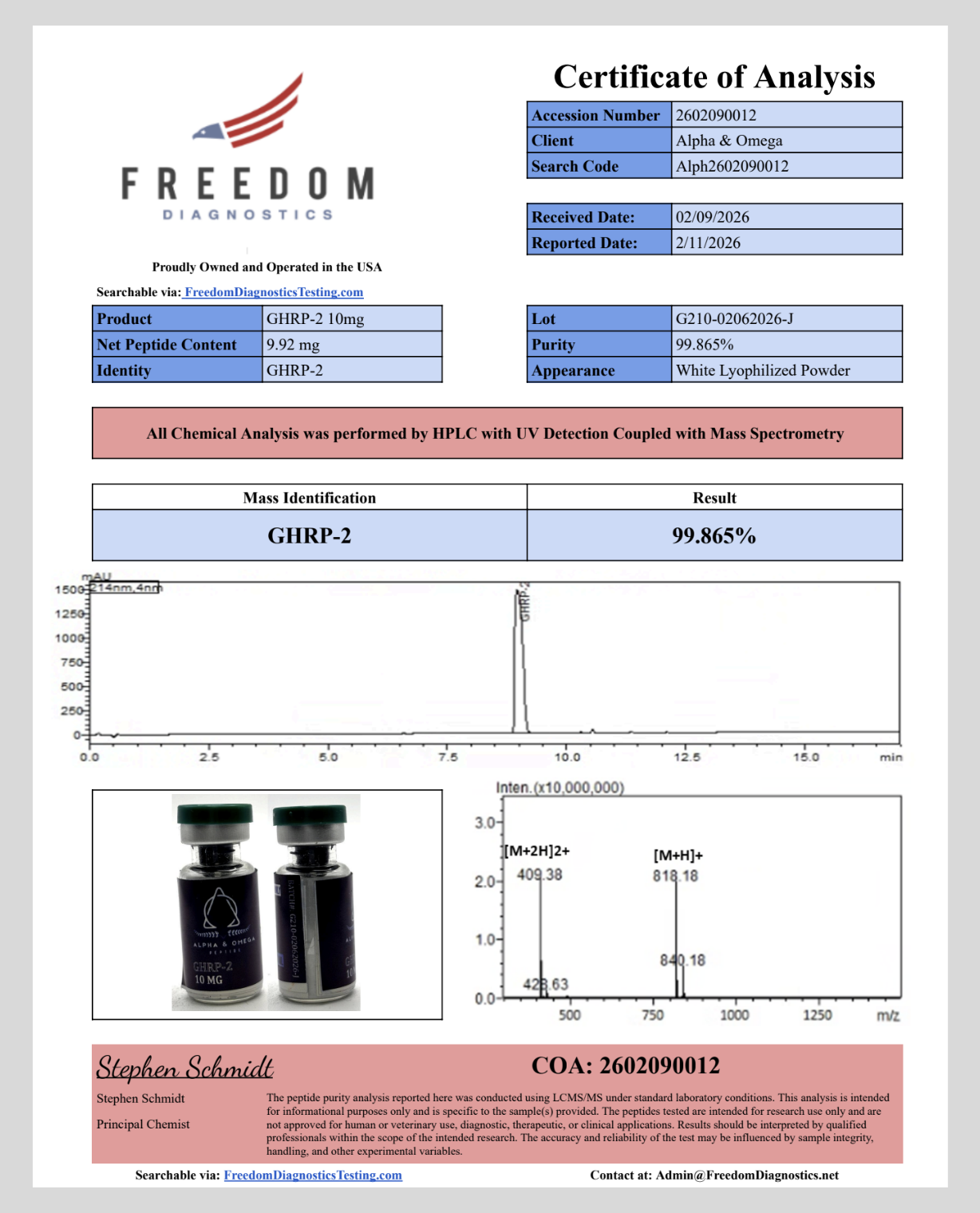
Alpha Omega Peptide follows controlled synthesis and internal verification procedures to support research consistency. Each batch undergoes identity and purity review prior to release. Lot-specific documentation supports structured research planning and helps laboratories maintain alignment when repeating experiments or organizing longer-term study timelines.
Important Notice
This product is intended strictly for research use in controlled laboratory settings. It is not approved for diagnostic, therapeutic, human, or animal use.